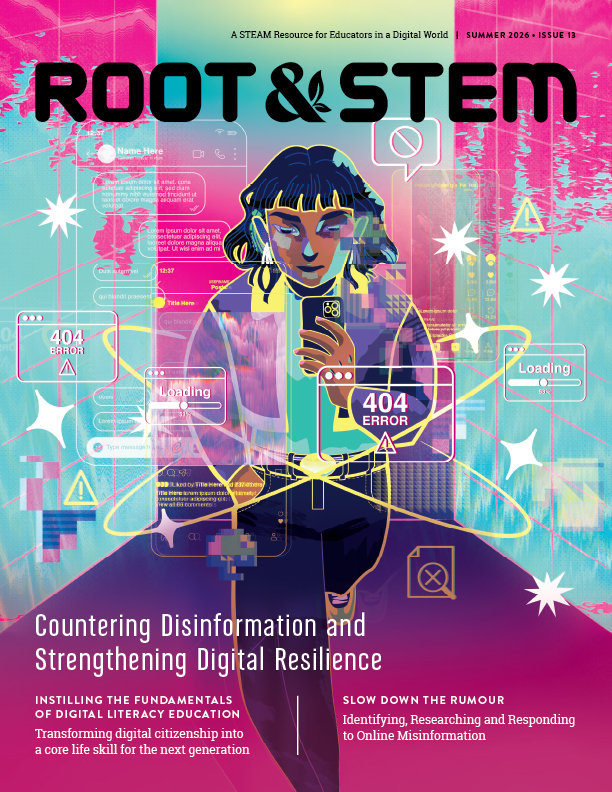
Root & STEM 13 – Online information moves quickly in the age of AI. A misleading headline, altered image, or emotionally charged post can reach thousands of people and have a major impact before anyone pauses to ask: Is this true? Is it even real?
Issue 13 of Root & STEM Magazine –Countering Disinformation and Strengthening Digital Resilience– is centered around this reality and provides curriculum and resources to help grades K–12 educators effectively prepare learners to navigate a perpetually evolving social media and digital landscape.
This issue explores misinformation, disinformation, malinformation, and digital literacy. Its stories examine how misleading content spreads, how it can affect communities, and how thoughtful digital citizens can navigate online spaces safely, ethically, and critically.
Inside This Issue
A wealth of original Canadian stories and more than 15 curriculum resources, lesson plans, activities, and extensions for the classroom, including:
- “Slow Down the Rumour: Identifying, Researching, and Responding to Online Misinformation,” a practical look at recognizing warning signs, checking sources and, responding responsibly to questionable content.
- “Instilling the Fundamentals of Digital Literacy Education,” which explores why digital media literacy is a core life skill and how educators can integrate it across subjects and grade levels.
- Stories about digital citizenship, online impersonation, artificial intelligence, cultural representation, community trust, and advocacy.
- Classroom activities that help students evaluate online claims, understand how algorithms shape what they see, and recognize techniques used to spread disinformation.
- And much more!
The issue supports students in developing habits that extend beyond identifying whether something is true or false. It encourages them to pause before sharing, consider who created a message and why, seek reliable sources, recognize emotional manipulation, and understand how their actions affect the wider digital community.